The Definitive Guide to Sourcing Timeless Fine Art

Oil Sunflower Print on Gallery Wrap Canvas
Staring at a blank wall trying to choose the right art can be incredibly overwhelming.
We’ve all been there: you want your home to feel cohesive, intentional, and uniquely yours, but finding the right pieces to bring that vision to life feels like a monumental task. Do I simply measure the space, look at my colors, and pick a piece that matches?
The boundaries of your rooms shouldn’t just partition space—they should hold windows that anchor your attention, shift your evening mood, and force you to actively pause. When you move past superficial retail fillers, finding the right artwork isn't about matching color swatches to your rug. It is about investing in a timeless visual anchor.
But how do you find high-fidelity, classic fine art that will stand the test of time—without spending your entire life savings on a single piece?
If you want your environment to evoke a permanent feeling rather than just fill a temporary void, this master guide outlines the core design physics, material rules, and curation strategies you need to shop smart for affordable, museum-quality prints.
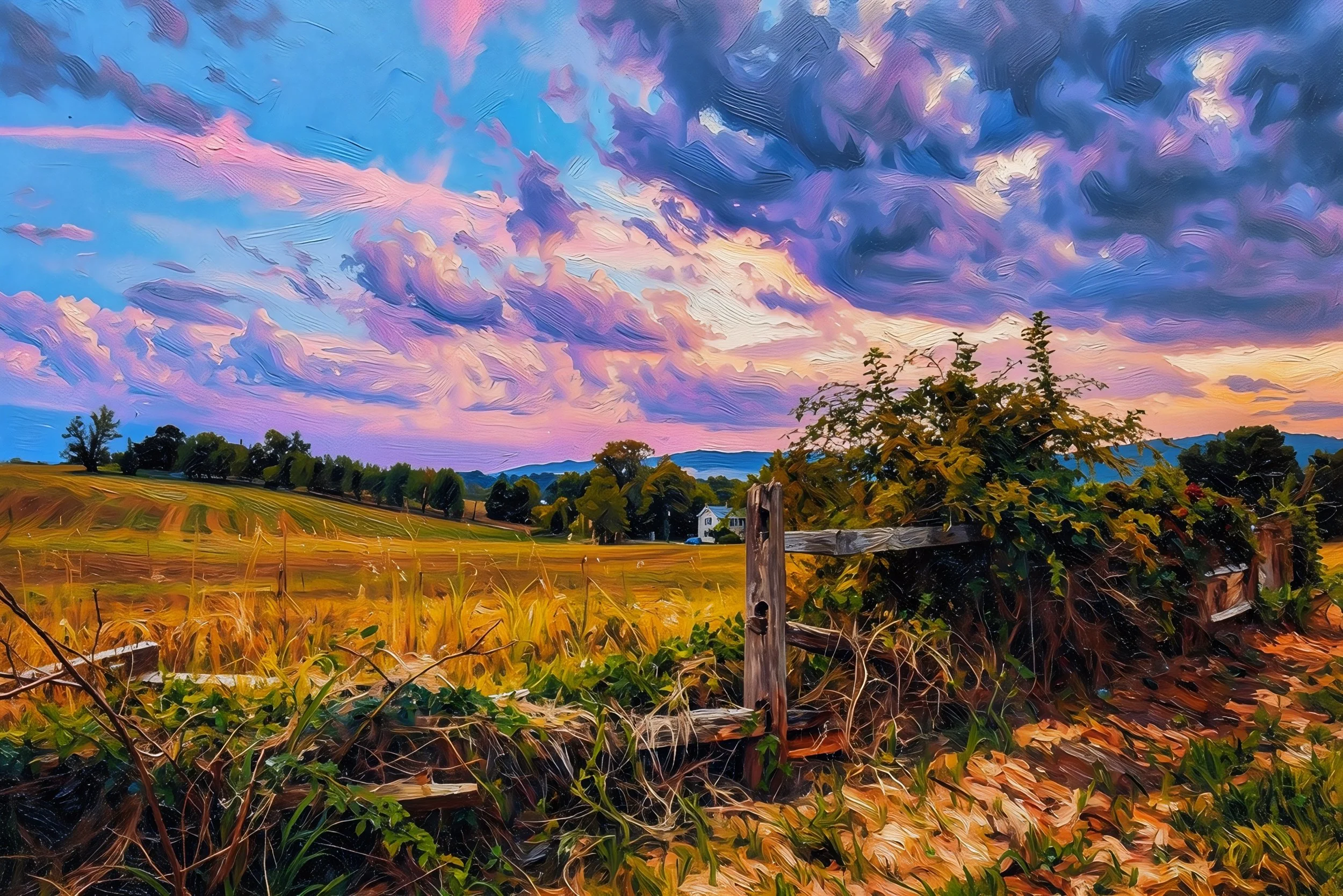
Middletown MD Farm Fence Oil on Canvas
Part 1: Prioritize Enduring Subject Matter Over Fleeting Trends
The quickest way to buy art you will regret in two years is to chase home decor trends dominating social media feeds. Trends are hollow; they evaporate quickly, leaving your space feeling incredibly dated. If you want an investment that lasts decades, look for subjects with historically enduring visual weight.
Architectural Symmetry and Classic Florals
Balanced, structured organic subjects never go out of style. Take a piece like our Square Blue Orchid fine print. Because square formats possess an inherent geometric stability, they lock a room's focus in with deliberate symmetry.
The deep, moody botanical layers inside ensure the eye never gets bored. I’ve found when I look for art pieces that I save them, wait a few days, and then revisit them. If I still like the piece after putting it away, it’s a good piece to buy. This structural balance allows the print to act as a anchor, centering the room even if your furniture layout changes over the years.

Blue square orchid on gallery wrap canvas
Atmospheric Fine Art Photography
Look for landscapes or regional photography that capture light, shadow, and mood rather than a specific trendy location. A misty morning over a lake, a raw coastal shoreline, or a dramatic wildlife silhouette has carried artistic value for centuries and always will. Fine art photography provides an atmospheric window into another world, bringing quiet stillness or raw energy into high-traffic living areas.
Expressive Abstract Textures
Classic abstracts rely on depth, contrast, tonal harmony, and sweeping movement rather than loud, neon color schemes or hyper-specific graphic patterns. A well-composed abstract print gives the mind room to interpret and re-interpret the piece over time, making it a highly versatile asset as your personal tastes evolve.

vintage oil duck on river canvas gallery wrap
Part 2: Leverage High-Fidelity Prints for Affordable Elegance
You do not need to buy a five-figure original oil painting from a brick-and-mortar gallery to give your home a high-end, classic feel. The secret to modern art collecting is investing in premium fine art prints.
By purchasing a high-fidelity print, you are getting the exact brushstrokes, depth of pigment, and emotional resonance of a master composition at a fraction of the cost. This allows you to intentionally curate your entire home with museum-quality visuals while staying completely within an accessible budget. It shifts the philosophy of art ownership from exclusive luxury to livable, daily inspiration.
Part 3: Don't Compromise on Physics (Insist on Archival Materials)
Affordable should never mean cheap. If an art print arrives looking like a glossy, lightweight poster, it will flatline under your home's natural lighting, wrinkle within its frame over time, and quickly fade from sun exposure. True longevity relies entirely on the physical construction of the medium:
The Paper: Insist on heavy, 300 gsm premium silk paper or robust, textured cotton canvas. This density prevents the paper from warping due to ambient room humidity.
The Ink: Ensure the gallery uses fade-resistant archival inks. These specialized pigments lock into the fibers, keeping contrast sharp for a lifetime.
The Finish: Look for matte or premium silk finishes that catch natural daylight beautifully rather than reflecting a cheap, plastic glare.
When you invest in museum-grade source materials, the art survives sun exposure, moving days, and changing layout setups without losing its crispness or depth.
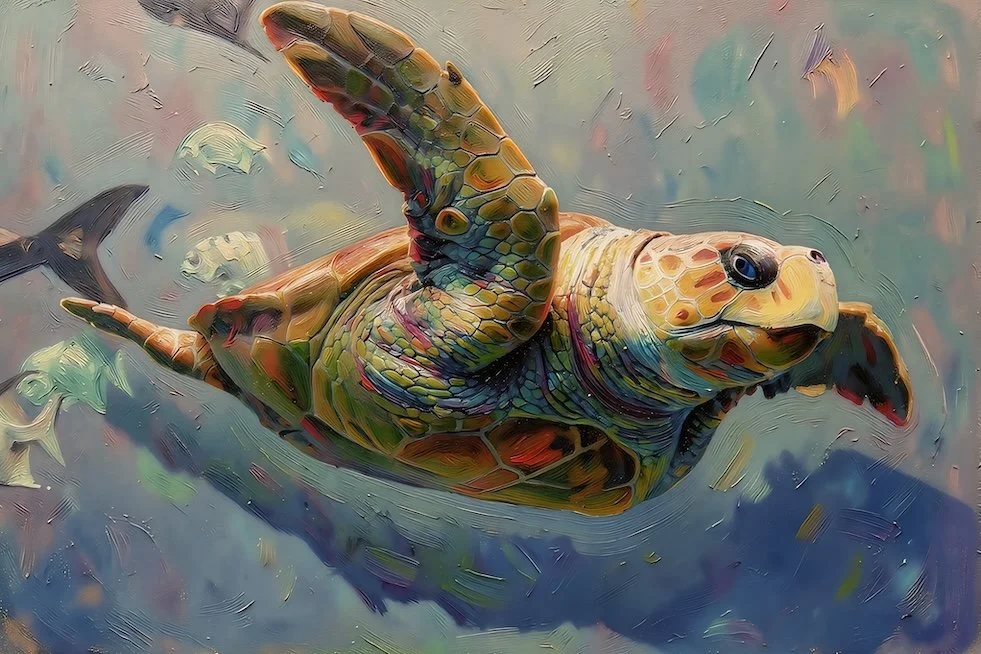
Sea Turtle on Gallery Wrap Canvas shot in Virginia Beach
Part 4: Room-by-Room Curation Blueprint
Every room in your home possesses a unique emotional and functional environment. The art you choose should align with the energy of that specific space.
The Living Room: Creating the Command Center
Your living room is typically a high-traffic, multi-functional space meant for both entertaining and relaxation.
The Goal: A major, commanding focal point that sparks conversation but doesn't induce visual fatigue.
The Choice: Large-scale abstract canvas art or rich, deep botanical compositions. If the piece speaks to your intuition, let it dominate. A singular, large focal point with genuine spatial presence will always carry a heavier emotional resonance than a scattered, polite arrangement of tiny frames.
The Bedroom: Designing for Rest and Intimacy
The bedroom is your ultimate private sanctuary—a space entirely dedicated to decompression.
The Goal: Calming textures, soft gradients, and atmospheric depth.
The Choice: Atmospheric, misty landscape photography or minimalist-leaning fine prints. Avoid aggressive, high-contrast, sharp geometric angles here. Opt instead for flowing, natural lines and calming tonal palettes that invite the eye to relax.
The Home Office: Stimulating Focus and Clarity
A home workspace requires art that keeps the mind sharp without creating a chaotic, distracting backdrop for video calls.
The Goal: Structured symmetry and clear, clean compositions.
The Choice: Strong, balanced formats like the Square Blue Orchid fine print. The clean geometry of a square frame fosters an environment of mental organization, while the intricate interior details offer a perfect mental escape during short work breaks.
Part 5: Framing Styles That Stand the Test of Time
A masterpiece can easily be undercut by a poor framing choice. To ensure your affordable art prints maintain a high-end, classic aesthetic, skip the trendy or over-ornate frames and stick to timeless, clean design systems. |
| Frame Style | Best Suited For | Visual Impact |
|---|---|---|
| Clean Black Wood | Photography, Modern Abstracts | Creates a bold, crisp border that acts as a visual window. |
| Gallery White | High-Contrast Fine Prints, Bright Works | Melds seamlessly into light walls, letting the art float. |
| Natural Oak/Maple | Organic Subjects, Landscapes | Introduces warmth, texture, and a soft, modern earthy vibe. |

Sheringham England Water Color on Gallery Wrap Canvas
The Matting Rule
When framing a paper fine art print, always utilize an acid-free mat board. A wide mat (2 to 3 inches) instantly elevates a print, giving it breathing room within the frame and mimicking the presentation style of high-end metropolitan museums.
Part 6: Frequently Asked SEO Questions (FAQ)
How big should art be above a sofa or bed?
As a firm rule of thumb, artwork hanging directly over a couch or headboard should take up roughly 60% to 75% of the available, open wall space that isn’t covered by the furniture. For a standard sofa, aim for the frame or canvas grouping to span roughly two-thirds of the total sofa width to maintain correct visual proportions.
What is a giclée fine art print?
A giclée print is a high-resolution digital print made using an advanced inkjet process paired with high-quality archival inks and acid-free papers. Unlike standard commercial printing, giclée captures the truest variations of color, texture, and depth, matching the exact intent of the original artist.
Can fine art prints be placed in direct sunlight?
Standard posters will rapidly fade under UV exposure. However, if your print is crafted using premium archival pigments and heavy, fade-resistant silk or canvas substrates, it can safely handle normal daylight conditions without losing its depth or vibrancy. For extreme sunlight, consider framing with UV-protective acrylic glass.
Give Your Walls a Soul at Whysall World
Sourcing an evocative, timeless centerpiece shouldn’t mean wasting exhausting hours filtering through flat, commercial clutter or overpaying at traditional brick-and-mortar galleries.
At Whysall World, we bridge the gap between world-class creative vision, enduring classic style, and accessible home curation. Founded by a Corcoran-educated photographer with a lifetime of master composition experience, our online gallery completely skips the superficial filler.
Every single piece—from the striking, balanced symmetry of our Square Blue Orchid fine print to our raw, expansive regional photography and textured oil-on-canvas prints—is meticulously crafted using fine museum materials and archival inks to ensure your investment looks just as breathtaking decades from now as it does today.
Stop settling for silent drywall. Give your home a timeless voice.